
Sliding and pocket doors in Newcastle that save space
Barn-style sliders that run across the wall, and pocket doors that disappear into it. Ideal for en-suites, cloakrooms and small rooms where a swinging door just gets in the way.
- Barn-style sliders
- Pocket door kits
- Soft-close tracks
Sliding and pocket doors for Newcastle homes
A hinged door needs a clear arc of floor to swing through. In a small en-suite, a box room or a narrow hallway, that arc can be the difference between a usable room and a cramped one. Sliding and pocket doors are the usual answer in Newcastle homes like these, because they move sideways instead of swinging.
We fit both types across Newcastle, Gateshead, Sunderland and the surrounding areas. Sliders are quick to install on almost any wall. Pocket doors take more work but leave nothing on show when they're open. Below we explain the difference, what's involved, and which suits which room.
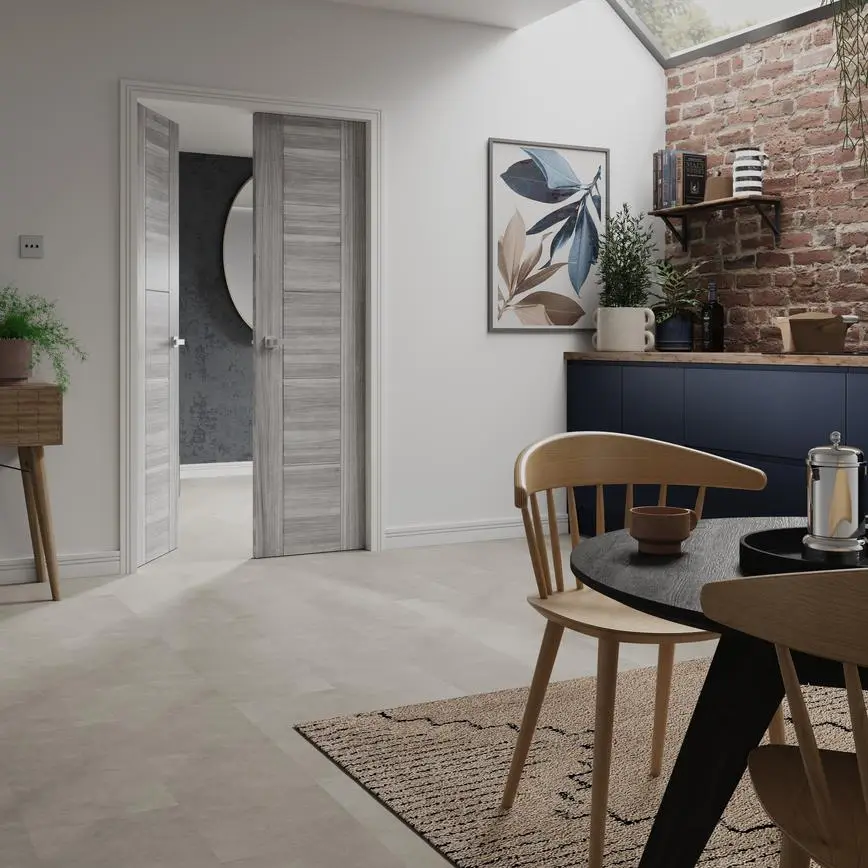
Barn-style sliding doors vs pocket doors
Barn-style and wall-mounted sliders
A track is fixed to the wall above the opening and the door hangs from rollers, sliding across the face of the wall. The track is on show, so it becomes part of the look, often in matt black. Sliders suit most walls, need no building work and can take almost any door leaf, including oak, painted and glazed designs.
Pocket doors
The door slides into a steel or timber cassette built inside the wall. When it's open you see only the edge of the door and a flush pull. It's the tidiest result, but the wall has to be built or rebuilt around the cassette.
| Barn-style slider | Pocket door | |
|---|---|---|
| Building work | None, the track fixes to the wall face | Wall opened up, or a new stud wall built |
| Wall space | Clear wall beside the opening, at least the door's width | The same width, but inside the wall |
| Look | Track and door on show | Disappears when open |
| Privacy | Small gaps around the edges | Closer fit within the frame |
| Fitting time | Usually half a day | A day or more, plus plastering and decorating |
Pocket door kits and stud walls
A pocket door kit is a ready-made frame with the track built in. It's designed to sit inside a stud wall, so the wall needs to be thick enough to take the kit, and there must be a clear section beside the opening at least as wide as the door. Pipes, cables, switches and sockets can't run through that section, because the door slides into it.
In practice we see three situations:
- New stud walls in extensions or loft conversions. The kit goes in before the wall is boarded, which is the easiest route.
- Existing stud walls. We strip the board, take out studs, fit the kit and re-board the wall ready for plastering.
- Solid brick or block walls. A pocket door usually isn't practical here, and a surface slider or a bifold door is the better choice.
Light switches often need moving to the other side of the opening, which is a job for an electrician. We point this out at the survey so nothing comes as a surprise.
Sliding doors for en-suites and bathrooms
En-suites are where we fit the most pocket doors. They're often squeezed into the corner of a bedroom, and a door that swings into either room can block the shower, the toilet or the wardrobe. A pocket door frees up that space completely.
For privacy, a sliding door needs its own type of lock, usually a hook lock with a thumb turn inside and an emergency release outside, the same idea as a normal bathroom lock. Our handles and hardware page covers the options. Barn-style sliders work in bathrooms too, but the small gaps at the edges make them better suited to an en-suite than a main family bathroom.
To bring light into a windowless en-suite, a glazed door with obscure glass works well on either system.
Do sliding doors come with soft-close?
Most good tracks offer soft-close dampers, and we recommend them for almost every slider. A damper catches the door in the last few centimetres of travel and draws it gently shut, so it can't slam or bounce back. That matters with heavy oak doors and in homes with young children.
Dampers can be fitted at one end or both. A damper at the open end stops the door crashing into the stop when it's pushed hard. Both add a little to the cost of the track, and they're far easier to fit at the start than to add later.
What's involved in fitting a sliding or pocket door?
Fitting a barn-style slider
We check the wall for cables and pipes, then fix the track into solid backing, using a timber batten where the wall needs it, and set it dead level. The door is hung, a floor guide is fitted so it can't swing out, and the stops and dampers are adjusted. The opening usually gets a neat lining and architrave on the room side. Most sliders are fitted in half a day.
Fitting a pocket door
Pocket doors are a bigger job. The old lining comes out, the wall is opened up, the kit is fixed plumb and level, and the wall is boarded over. The boarding then needs plastering and decorating before the door, linings and flush pulls go on. In an existing wall, expect the work to be spread over a few days to allow drying time.
Every quote is fixed and itemised, so you'll see the kit, door, hardware and labour listed separately. Our door fitting page explains how we work in more detail.
Sliding and pocket door questions
Can any door be used as a sliding door?
Most standard internal doors can hang on a sliding track, as long as the track is rated for the weight of the door. Heavy solid oak doors need a heavier-duty track.
Are pocket doors reliable?
Yes, when the kit is fitted plumb and level and the track is good quality. Most problems we see come from kits that were fitted out of square, which is why careful setting out matters.
Can you fit a pocket door in a solid wall?
It is rarely practical. A solid brick or block wall would need a large section taking out and a new stud wall building in its place, which usually costs more than it's worth. A surface-mounted slider is the usual alternative.
You might also need
Internal Door Supply & Fitting
One door or the whole house, trimmed and hung with hinges, latches and handles fitted.
Learn moreDoor Frames, Linings & Architrave
New linings, architrave and skirting to replace worn or twisted frames, so your doors have a square opening to hang in.
Learn moreDoor Handles & Hardware
Lever handles, hinges, bathroom locks and closers in matt black, brushed chrome, satin brass and other finishes.
Learn moreGet a quote for sliding or pocket doors
Tell us which room it’s for and send a photo of the wall either side of the opening. We’ll reply with an itemised quote, usually within one working day.